Lisa S. Stump
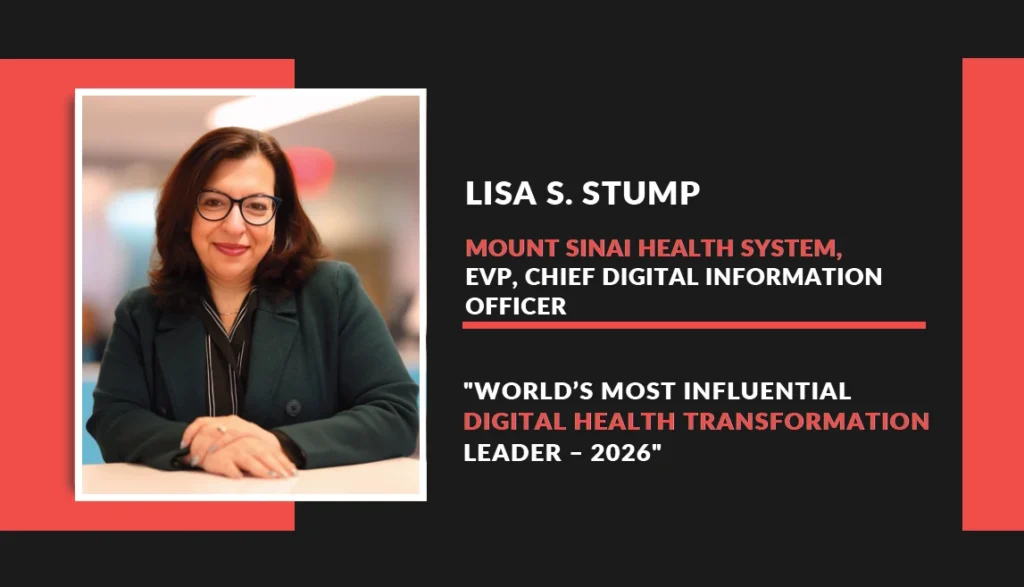
Lisa S. Stump: Designing the Digital Future of Healthcare With Purpose and Precision
Healthcare is one of the most complex industries in the world. Every decision carries high stakes, and every process directly affects patient outcomes. For Lisa S. Stump, EVP and Chief Digital Information Officer at Mount Sinai Health System, this reality has shaped her entire career. Her journey began not in a boardroom but at the bedside, where she witnessed firsthand how systems, processes, and technology could influence patient safety.
Early in her career as a clinical pharmacist within a health system, medication orders were handwritten, and safety depended largely on human vigilance. Nurses, pharmacists, and physicians relied heavily on manual checks and memory to prevent errors. While these practices reflected the dedication of healthcare professionals, Stump believed that the system itself could be designed to better support them. She saw the potential for technology to reduce risk and improve care.
A pivotal moment early in her leadership journey reinforced that belief. After a routine computer upgrade at her organization, the team noticed a sudden rise in near-miss medication events. Instead of treating the issue as a simple technical glitch, Stump approached it as a clinical problem. As Director of Pharmacy at the time, she gathered a small team and visited patient care units to observe how work was actually being done.
What they discovered revealed a deeper issue. Clinicians often had to read information on one screen, write it down manually, and then enter it into another system. The process slowed decision-making and increased the risk of errors. The experience reinforced an important lesson that would shape her leadership philosophy for years to come. The most valuable insights often come from the front lines, and meaningful technology transformation begins by understanding the real challenges clinicians face.
Today, as the digital leader for Mount Sinai Health System, Stump remains guided by that same perspective. Her work focuses on building systems that make healthcare safer, simpler, and more effective for clinicians and patients alike. She believes that when technology reduces complexity and cognitive burden, it directly improves safety, care quality, and the experience of everyone involved.
Leadership Rooted in Clinical Understanding
Stump’s leadership philosophy is grounded in a deep understanding of clinical environments. Having worked directly in patient care early in her career, she approaches digital transformation not as a technical exercise but as a clinical and operational responsibility.
She believes that successful healthcare technology initiatives must start with empathy for the people who use them every day. Clinicians operate in fast-paced, high-pressure environments where every second matters. Technology must support their work rather than slow it down.
One of the most important lessons she learned early in her leadership journey was the value of observation and listening. By engaging with nurses, physicians, pharmacists, and other frontline professionals, she developed a clear understanding of where technology created friction and where it could remove barriers.
That approach has remained central to her leadership style. Rather than designing solutions in isolation, Stump focuses on interdisciplinary collaboration. Clinical experts, technologists, operational leaders, and administrators work together to translate real-world needs into scalable digital solutions.
Her philosophy also reflects a broader view of healthcare safety. In her view, safety and experience are closely connected. When clinicians must navigate complicated systems or duplicate work across multiple platforms, the risk of errors increases. By simplifying processes and reducing unnecessary steps, organizations can improve both safety and efficiency.
This mindset helped guide the creation of a Clinical Informatics department during her earlier leadership roles. The goal was to bridge the gap between clinical care and information technology by bringing together professionals who could understand both worlds.
That effort laid the foundation for many of the large-scale digital transformation initiatives she would lead in the years that followed.
Building A Unified Digital Foundation
One of the most significant initiatives of Stump’s career was leading the implementation of an enterprise-wide electronic medical record system. At the time, Mount Sinai Health System operated with multiple record systems across hospitals and medical groups. Some locations still relied on paper documentation.
While individual sites had developed systems that worked for their local needs, the lack of standardization created fragmentation across the broader health system. Information did not always move easily between facilities, and clinicians often lacked a complete view of patient records.
The transition to a unified electronic medical record platform required more than technical execution. It demanded alignment across a complex organization with many stakeholders and perspectives.
Stump recognized that success would depend on building a shared vision. She focused on communicating how a common digital platform could improve patient care, enable safer transitions between providers, and create a stronger foundation for data-driven improvement.
Listening played an important role in that process. Clinicians and administrators across the system were invited to share their concerns, expectations, and insights. Transparent governance structures helped ensure that decisions were made collaboratively and aligned with the broader mission of the organization.
Another key element of the strategy was breaking the project into achievable phases. Rather than approaching the transformation as a single massive undertaking, the work was structured into milestones that teams could complete step by step.
An early mentor once offered Stump a piece of advice that continues to guide her work today: moving a mountain requires moving one shovel of dirt at a time. That philosophy helped sustain momentum during one of the most complex digital transformations in the health system’s history.
The result was not simply a new technology platform but a stronger foundation for coordinated care, improved data insights, and future innovation.
Navigating The Complex Challenges Of Digital Health
Healthcare organizations today face rapid technological change, increasing data complexity, and rising expectations from patients and clinicians alike. For Stump, the challenges of digital health extend far beyond the technology itself.
One of the most critical issues is the quality and reliability of healthcare data. High-quality data is essential for clinical decisions, research, operational planning, and emerging technologies such as artificial intelligence. When data is fragmented or inconsistent, it becomes difficult to generate reliable insights.
To address this challenge, Stump emphasizes the importance of strong enterprise data architecture and standardized definitions across the organization. Clear governance structures ensure that performance metrics and reporting frameworks are consistent and meaningful.
Artificial intelligence presents both opportunity and responsibility. Stump believes that AI can play an important role in improving healthcare delivery, but only when it is implemented with transparency and strong oversight.
She often describes data as the soil from which insights grow, while AI functions as a powerful tool that must be used carefully by experts who understand its purpose and limitations.
Another challenge in healthcare transformation is adoption. Healthcare professionals already operate under intense workloads, and poorly designed technology can increase frustration rather than solve problems.
Stump approaches this challenge by focusing on user experience. Digital tools must reduce the number of clicks required to complete tasks, streamline workflows, and eliminate unnecessary steps.
Change management also plays a major role. Clear communication, strong training programs, and continuous feedback loops help ensure that teams feel supported as new systems are introduced.
Finally, interoperability remains a major industry challenge. Patient care often involves multiple organizations, platforms, and care settings. Without strong integration between systems, clinicians may rely on manual workarounds that slow down care delivery.
Stump focuses on standards-based integration strategies that enable information to flow seamlessly across the healthcare ecosystem. These connections support better coordination between providers and improve the overall patient experience.
Turning Innovation Into Sustainable Impact
For Stump, innovation is meaningful only when it delivers lasting impact. Technology projects can generate excitement, but their real value depends on how effectively they improve outcomes for patients, clinicians, and communities.
Her approach begins with a clear definition of the problem being solved. Instead of asking which technology to deploy, her teams focus on identifying the outcomes that must improve and the workflows that will be affected.
This outcome-focused mindset helps ensure that digital initiatives remain aligned with clinical priorities and community needs.
Governance and accountability are also essential components of sustainable change. Successful initiatives require clear decision-making structures and defined ownership. By aligning digital projects with enterprise priorities, organizations can avoid fragmentation and duplication.
Measurement plays a central role in this approach. Stump believes that success metrics must be defined before implementation begins. These metrics often include improvements in quality, safety, access, equity, experience, and operational efficiency.
After a new system goes live, teams continue monitoring performance to determine whether the expected improvements are being achieved. If outcomes fall short, adjustments are made to refine the solution.
Several operating principles guide Stump’s leadership in this area. She emphasizes the importance of rigorous planning and execution, clear communication, and accountability. Waiting for perfect solutions can delay progress, so organizations must balance thoughtful design with practical action.
At the same time, user experience remains a constant priority. Technology should reduce friction so clinicians can focus on delivering care rather than navigating complicated systems.
When thoughtful design is combined with disciplined execution and continuous learning, digital transformation becomes a sustainable force for improvement.
A Culture Of Learning And Collaboration
Mount Sinai Health System has embraced several new approaches that help accelerate innovation and organizational growth. One of the most significant shifts has been moving from isolated technology solutions to a platform-based strategy.
Instead of solving individual problems with separate tools, the organization invests in shared digital capabilities that support multiple initiatives. Core workflows, standardized data foundations, and reusable technology components allow successful innovations to expand more quickly across the health system.
This platform mindset reduces variation between sites and improves reliability across clinical and operational processes.
Another important development is the strengthening of the organization’s learning loop. Digital initiatives are now designed with clear outcome measurements from the beginning. Once systems are implemented, teams analyze results and use real-world data to refine solutions.
By treating implementation as the beginning of learning rather than the end of a project, Mount Sinai continues improving its systems over time.
Artificial intelligence also plays an increasing role in the organization’s digital strategy. Rather than pursuing AI purely as an experimental technology, Stump focuses on practical applications that improve safety, reduce administrative burden, and enhance decision-making.
Strong governance structures ensure that AI initiatives meet rigorous standards for privacy, security, and clinical oversight.
Collaboration beyond the organization is another key element of this strategy. Healthcare innovation increasingly depends on partnerships with academic institutions, technology companies, and other healthcare providers.
By working together across the broader ecosystem, organizations can share knowledge, accelerate research, and improve patient outcomes on a larger scale.
Looking Toward The Next Era Of Healthcare
As healthcare continues to evolve, Stump remains focused on building the digital capabilities that will define the next generation of care delivery.
One of her primary goals is translating digital innovation into measurable results at scale. Many healthcare organizations successfully pilot new technologies, but sustaining those solutions across large systems can be difficult. Stump is committed to ensuring that successful innovations become embedded in everyday workflows.
Another priority is strengthening the foundational infrastructure that supports digital transformation. Resilient technology platforms, robust cybersecurity programs, and interoperable data ecosystems are essential for both clinical operations and scientific research.
These foundational capabilities may not always be visible to patients or clinicians, but they enable organizations to innovate with confidence.
Equally important is the development of people and culture. Healthcare professionals will increasingly work alongside advanced digital tools and AI-powered systems. Preparing the workforce for this environment requires investment in education, leadership development, and new operating models.
Stump believes that successful organizations will combine technical expertise with compassion and human-centered leadership. Teams must be able to adapt to change while remaining focused on the mission of improving patient care.
Her long-term vision centers on building systems that endure. When strategy, technology, and culture are aligned, healthcare organizations can create lasting improvements that benefit patients, clinicians, and communities.
Advice For The Next Generation Of Leaders
For those aspiring to leadership roles, Stump offers advice rooted in reflection and purpose. She encourages emerging leaders to think about the legacy they hope to leave behind.
Leadership journeys rarely follow a straight path. Challenges, unexpected opportunities, and moments of uncertainty are all part of the process. By staying curious and embracing lifelong learning, leaders can continue growing throughout their careers.
Equally important is the ability to lead with intention. Decisions should reflect both personal values and a commitment to improving the lives of others.
For Stump, leadership ultimately comes down to impact. When technology simplifies work, strengthens safety, and improves care, it fulfills its true purpose. Through thoughtful digital transformation, she continues to help shape a future where healthcare systems support clinicians more effectively and deliver better outcomes for every patient they serve.