Oksana Kolesnikova ( CEO/FRANCHISOR at Oksana Management Group, Inc)
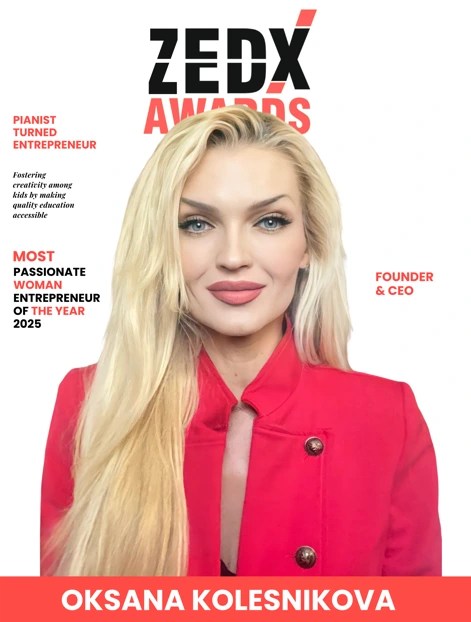
Oksana Kolesnikova CEO/FRANCHISOR at Oksana Management Group, Inc passionate women of the year 2025 Fostering creativity among kids by making quality education accessible The world is full of talent and musical ability. We all need to follow our own paths, and if we’re true to ourselves, we can walk it with confidence. Oksana Kolesnikova has always followed her passions, which is why her life is full of meaning and purpose. Oksana, A Russian-born American, is a renowned pianist, composer, public speaker, and child educator who is widely admired for making a big difference in the lives of many people & organizations. She is a powerful and determined woman who deals with life, love, and business with a positive mentality and a sense of humor. Her journey began when she moved to Kazakhstan from Russia at the age of 7 and started learning classical piano in a music school. With a long and illustrious career in music, she has performed throughout the world and won several awards for her excellence as a pianist and composer. This inspirational woman is now the Founder & CEO of three well-established businesses, namely Oksana Management Group, Inc, Oksana Franchising International, and Oksana Foundation. A woman with a big heart, Oksana Kolesnikova is a hopeful and confident role model that every business should be proud of. With a positive and upbeat outlook, she is sure to bring the power of womanhood to the world. Inception story – Pianist Turned Entrepreneur A sense of purpose, a pursuit of curiosity, and a chance to make a meaningful mark on the world are what Oksana Kolesnikova lives for. As a shy child, she used to have trouble expressing herself. Oksana saw the magic happening right when she discovered her love for the piano. Thanks to her supportive parents who introduced her to this form of art. Born in Siberia, Russia, she got enrolled in a music school when she moved to Kazakhstan. Then, in her teens, Oksana moved to the US where she grasped a treasure trove of opportunities while pursuing her music training. Soon after, she bagged a scholarship in the Florida State Young Artists Symposium Competition which gave her a blissful chance to first study at Saint Petersburg College (Florida), and later at Florida State University. Definitely a pleasant turning point in her life, in 1999 Oksana met her husband-to-be, Alex, at his birthday party before attending FSU. They were married in 2000 and he became her career manager. In 2006, the duo moved to LA. This award-winning artist started her journey after graduation as a performing artist across Florida. Having repeatedly played piano, her fan base began to grow immensely and it indeed led to a palpable surge in her confidence. But she did not stop there! Her drive to achieve the best made her land a prestigious position as an in-house pianist at the legendary Polo Lounge in Beverly Hills Hotel. Oksana remembers, “It was a good learning curve for me as I performed there daily to the world-famous movie stars, celebrities, world leaders and famous entrepreneurs, people that I only used to see on TV, growing up in Russia.” As time slipped by, she became a marvelous mother to her son, Alessandro, in 2009. Although a perfect way to restore love & sanity, that phase came with a nice bundle of changes in her career as she couldn’t travel as a performer any longer. As a highly experienced professional musician, she went ahead and explored a whole host of possibilities. “I am grateful to the 7 years playing experience at the Polo Lounge. I started to build my private studio of piano students, many of whom were celebrities and their kids that I met at my glamorous gig,” Oksana adds. Later, she also opened Oksana School of Music, where she hired other instructors to teach diverse instruments alongside her. Little did she know the destiny was all prepared to feed her entrepreneurial spirit. After hustling constantly, Oksana opened her first company: Oksana Management Group, Inc. Luckily, the idea of her business model blossomed into a success. She states, “OMG focused on including not only music services, but also foreign languages, academic tutoring, Art, Acting/Drama, Chess, Financial Literacy for children and teens, and many other after school enrichment programs that are now offered not only to private clients but also to the schools (public, private, charter), school districts, municipalities and counties as well as online customers.” After soaking up the appreciation, this charismatic female entrepreneur decided to franchise her company in 2019 and that’s when her second company Oksana Franchising International was born. With a proven track record in the industry, her company is proud to offer franchising opportunities designed for entrepreneurs who want to get into the rewarding field of education. Besides, Oksana Franchising International is committed to the growth and success of its franchisees and the communities they serve. In 2020, Oksana Kolesnikova opened her 3rd company Oksana Foundation, which is a non-profit organization with a big mission. “I had a dream of having my own foundation for many years. As an artist, I used to perform at numerous fundraisers and charities events for many years, and I always dreamed to have one of my own foundation one day. I have received overwhelming support from our donors and sponsors who joined our mission to make this world a better place,” Oksana includes. The foundation is created with an aim to spread the message of hope and offer positive, creative outlets that will give children a sense of purpose. Since its opening, it has provided extracurricular educational opportunities to countless underprivileged children, free of charge. Apart from this, Oksana and her team have dedicated their time, energy, and resources to help kids who have been affected by the recent global pandemic. The world has been captivated by Oksana’s talent and perseverance to pursue dreams, without the shadow of a doubt. Her indomitable spirit towards life inspires millions of women to hustle