Joan Gillman
Lower & Middle School Science Teacher at The Browning School
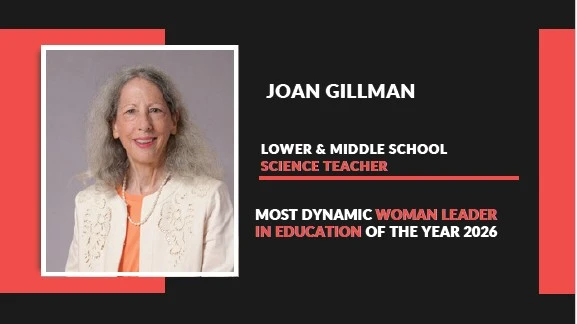
Joan Gillman’s Enduring Impact on Science Learning and Student Empowerment
In classrooms where curiosity is nurtured and ideas are allowed to take shape through exploration, Joan Gillman has spent more than four decades quietly shaping the future. As a Lower and Middle School Science Teacher at The Browning School, her journey reflects a deep commitment to education that goes far beyond textbooks and lesson plans. It is a story rooted in early fascination, strengthened through experience, and elevated by a clear vision of what learning can and should be.
From childhood experiments conducted in a bathroom to carefully measuring snowfall in her yard, Gillman’s connection with science began long before she entered a classroom as an educator. These early moments were not isolated childhood memories. They became the foundation of a teaching philosophy that values observation, creativity, and hands-on engagement. Today, her work continues to influence not only how students learn science but also how they see their role in the world.
Recognized as the “Most Dynamic Woman Leader in Education of the Year 2026,” Gillman represents a model of leadership that blends experience with adaptability. Her impact lies not only in academic achievement but in her ability to inspire confidence, curiosity, and responsibility in her students. Through her work, she demonstrates that education is not simply about knowledge transfer. It is about shaping individuals who are capable of thinking independently, acting responsibly, and contributing meaningfully to society.
A Leadership Philosophy Rooted in Inclusion and Curiosity
Joan Gillman’s leadership philosophy is grounded in a simple yet powerful belief: every child deserves the opportunity to shine. This principle has guided her approach since her earliest experiences in teaching, where she first discovered the importance of inclusion and encouragement.
During her high school years, she volunteered in educational and community settings, working with young students in classrooms, playgrounds, and swimming programs. These early roles revealed her natural ability to connect with children of varying abilities and backgrounds. She recalls how meaningful it was to help children overcome fear, build confidence, and feel included. Those experiences shaped her understanding of what effective teaching looks like.
“I believe it is important to give each child an opportunity to shine,” she has often emphasized. This belief continues to define her classroom environment today.
Her approach rejects the idea of a one-size-fits-all method in education. Instead, she focuses on understanding each student’s unique strengths and challenges. Whether a student excels in artistic expression, analytical thinking, or communication, Gillman ensures that those abilities are recognized and integrated into the learning process.
She also places strong emphasis on creating a safe and respectful environment. In her classroom, students are encouraged to ask questions without fear of embarrassment. Respect, dignity, curiosity, and honesty are not just values discussed in theory. They are actively practiced in daily interactions.
Gillman views her classroom as a community of learners. Students collaborate, support one another, and contribute to shared goals. This sense of community fosters both academic growth and emotional development. It also prepares students for real-world collaboration, where diverse perspectives and teamwork are essential.
Innovation Through Hands-On Learning and Interdisciplinary Thinking
Innovation in Joan Gillman’s classroom does not rely on complex technology or abstract theories. Instead, it is rooted in practical, hands-on learning experiences that make science tangible and engaging.
Her approach was significantly influenced by her early teaching experiences, including her work with profoundly deaf students. In that setting, she witnessed the power of experiential learning. Complex scientific concepts became accessible when students were able to interact directly with materials and processes. This insight became a cornerstone of her teaching strategy.
“I learned to include hands-on learning with my students,” she explains, reflecting on how those early experiences shaped her methods.
Today, her classroom is filled with activities that encourage experimentation, observation, and critical thinking. Students do not simply learn about scientific principles. They apply them through projects, collaborative exercises, and real-world problem-solving scenarios.
Gillman also integrates interdisciplinary learning into her curriculum. She believes that subjects should not be taught in isolation. Instead, connections between science, mathematics, language, and the arts should be emphasized.
“In my science classes, not only do the students learn science skills, but I also incorporate all of the other academic subjects into the lessons,” she notes. “In this way, learning doesn’t take place in isolation and the students see the connection between all of the disciplines.”
This approach reflects how knowledge is applied in real life, where challenges rarely fit neatly into a single subject area. By encouraging students to think across disciplines, she prepares them for complex problem-solving in the future.
Her leadership also extends beyond the classroom through her involvement in environmental initiatives. As a leader of the school’s Green Team, she has created opportunities for students to engage with real-world issues such as climate change, conservation, and sustainability. These initiatives combine academic learning with practical action, reinforcing the idea that knowledge can drive meaningful change.
Challenges, Adaptation, and Defining Milestones
A career spanning more than 40 years inevitably includes moments of change and challenge. For Joan Gillman, these experiences have not only tested her adaptability but have also strengthened her effectiveness as an educator.
One notable transition occurred when she began teaching younger students after years of working with older age groups. Adjusting her teaching style to meet the needs of second-grade students required creativity and flexibility. However, this shift ultimately became one of the most rewarding phases of her career.
She embraced the challenge by developing age-appropriate curricula that maintained the same level of engagement and intellectual stimulation. Over time, she discovered a deep appreciation for teaching younger students and became increasingly motivated to create exciting and meaningful learning experiences for them.
Looking ahead, she continues to evolve. With plans to include kindergarten students in her teaching responsibilities, she is once again preparing to adapt her methods to meet new developmental needs. This willingness to embrace change reflects her commitment to continuous growth.
Throughout her career, Gillman has achieved numerous milestones and received widespread recognition. Awards such as Top Educator of the Year, Top 25 Global Impact Leaders, and Lifetime Achievement honors highlight her contributions to education. She has also been featured in prominent publications and recognized by professional organizations.
Despite these accolades, her perspective on success remains grounded.
“While it is wonderful receiving all of these awards, I still receive the most satisfaction helping my students become lifelong learners,” she shares.
For Gillman, the true measure of achievement lies not in recognition but in the growth and success of her students. Moments when students gain confidence, develop new skills, or discover their passions hold far greater significance than any formal award.
Vision for the Future: Preparing Students for a Changing World
As education continues to evolve, Joan Gillman remains focused on preparing her students for a future shaped by rapid technological advancement and complex global challenges.
She recognizes the growing influence of artificial intelligence and other emerging technologies in education. While she acknowledges their potential, she also emphasizes the importance of thoughtful implementation.
“The use of AI technology is in its infancy, but it is bound to become much more widespread,” she explains. “Our job is to make sure that it enhances the learning experience and does not take away from the students developing their own skills.”
Her approach reflects a balanced perspective. Technology should support learning, not replace critical thinking or creativity. By maintaining this balance, she ensures that students develop essential skills such as observation, analysis, and problem-solving.
Gillman also anticipates a shift toward more interdisciplinary curricula. She believes that future education systems must reflect the interconnected nature of real-world challenges. By integrating multiple subjects into cohesive learning experiences, educators can provide students with a more comprehensive understanding of complex issues.
Environmental education remains a central focus of her vision. Through initiatives like the Green Team, she encourages students to become active participants in addressing environmental challenges. These efforts extend beyond theoretical discussions to include practical actions such as fundraising, awareness campaigns, and community projects.
Her goal is to instill a sense of responsibility and empowerment in her students. She wants them to understand that even small actions can contribute to meaningful change.
Human and Industry Impact: Inspiring Change Beyond the Classroom
Joan Gillman’s influence extends far beyond her immediate classroom. Through her teaching, leadership, and community involvement, she has contributed to shaping a generation of students who are not only academically capable but also socially conscious.
One example of her impact can be seen in the initiatives led by the Green Team. Inspired by lessons on global challenges such as water scarcity and climate change, students have taken proactive steps to support meaningful causes. Fundraising efforts have raised significant amounts for organizations addressing environmental and humanitarian issues.
These initiatives demonstrate the power of education to inspire action. By connecting classroom learning to real-world issues, Gillman helps students see the relevance of their studies and their potential to make a difference.
She also emphasizes the importance of fostering environmental awareness from a young age. Through activities such as park cleanups and conservation projects, students gain practical experience in sustainability efforts. These experiences not only enhance their understanding of environmental issues but also build leadership and collaboration skills.
Her impact is equally evident in the confidence and mindset of her students. By creating a supportive and inclusive learning environment, she encourages students to take risks, ask questions, and explore new ideas. This approach helps them develop resilience and a lifelong love of learning.
Gillman also plays a role in influencing the broader education community. Through her involvement in advisory boards and professional organizations, she contributes to discussions on educational strategies and innovation. Her experience and insights provide valuable guidance for other educators seeking to enhance their teaching practices.
A Legacy of Dedication and Continuous Growth
Joan Gillman’s career is a testament to the power of dedication, adaptability, and passion. Over the years, she has continuously evolved as an educator, embracing new ideas and approaches while staying true to her core values.
She attributes her longevity in the profession to her commitment to professional development. By attending workshops, courses, and conferences, she has remained engaged with new teaching methods and perspectives. This willingness to learn has allowed her to stay relevant and effective in a rapidly changing educational landscape.
Her advice to aspiring educators reflects her own experiences. She emphasizes the importance of flexibility, creativity, and maintaining a sense of humor. Teaching, she acknowledges, can be challenging, but it is also deeply rewarding.
“Teaching is a very challenging and exhausting career, but it is still one of the most rewarding professions you can choose,” she says.
She also highlights the importance of collaboration among educators. By seeking support and sharing ideas, teachers can enhance their effectiveness and create better learning environments for their students.
Ultimately, Joan Gillman’s legacy is defined not by awards or titles but by the countless lives she has influenced. Her work has helped students develop not only academic skills but also confidence, curiosity, and a sense of purpose.
As education continues to evolve, her approach serves as a reminder of what truly matters. At its core, teaching is about connection, inspiration, and the belief that every student has the potential to succeed.
Through her unwavering commitment to these principles, Joan Gillman has established herself as a dynamic leader in education. Her journey reflects the profound impact that one dedicated educator can have on individuals, communities, and the future of learning itself.